 Skip to content
The Great Debate: Mobile Credentials vs Key Cards for Modern Business Security
In the rapidly evolving landscape of physical security, facility managers and IT heads are facing a pivotal decision: how should employees and visitors enter the building? For decades, the plastic proximity card was the gold standard. However, the rise of the smartphone has introduced a formidable challenger. The debate of mobile credentials vs key cards is no longer just about convenience; it is about security, scalability, and long-term financial planning.
At XS Controls, as a leading reseller of high-end security infrastructure, we see firsthand how this choice impacts operational efficiency. While hardware is a significant factor, the shift toward a digital-first approach is often driven by cloud access control pricing models that offer lower upfront costs and better long-term value. In this guide, we will break down the strengths of each system to help you decide which side of the mobile credentials vs key cards debate fits your organization.
Understanding the Basics: Mobile Credentials vs Key Cards
To understand the core differences in the mobile credentials vs key cards comparison, we must look at how the user interacts with the system.
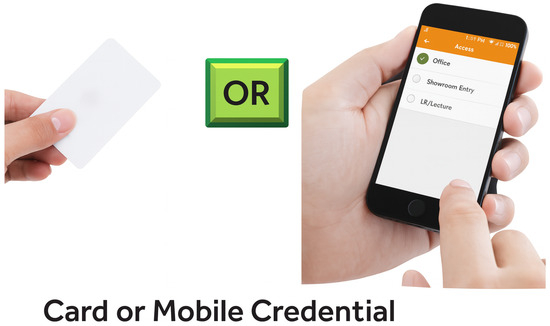
- Key Cards: These are physical, plastic tokens (often using RFID or MIFARE technology) that users tap against a reader. They are familiar, easy to distribute, and don’t require a battery.
- Mobile Credentials: These utilize smartphone credentials stored in a secure app. Using Bluetooth Low Energy (BLE) or Near Field Communication (NFC), the phone communicates with the reader to grant access.
When evaluating mobile credentials vs key cards, the “user experience” is the first major differentiator. A smartphone is rarely left at home, whereas a plastic card is easily forgotten, lost, or damaged. By utilizing smartphone credentials, businesses can eliminate the friction of “locked-out” employees, which directly impacts daily productivity.
The Economic Shift: Cloud Access Control Pricing
For many procurement officers, the decision between mobile credentials vs key cards comes down to the bottom line. This is where cloud access control pricing plays a vital role.
Traditional “on-premise” systems require a heavy initial investment in local servers, dedicated IT staff, and physical card inventory. Conversely, cloud access control pricing usually follows a Software-as-a-Service (SaaS) model. This means:
- Lower Initial Capex: You pay for the readers and a monthly subscription rather than a massive server installation.
- Scalability: You can add one door or one thousand doors without needing to upgrade your local hardware.
- Automatic Updates: Security patches and feature updates are handled in the cloud, ensuring your system is never obsolete.
When you factor in the recurring cost of replacing lost plastic cards—which can range from £5 to £10 per unit—the mobile credentials vs key cards argument shifts heavily toward mobile. With digital access cards stored on a phone, the “replacement cost” is zero.
Security and Compliance: Which is Safer?
Security is the most contested area in the mobile credentials vs key cards discussion. Traditional key cards are surprisingly vulnerable. Standard 125kHz proximity cards are easily “cloned” using cheap devices found online. If a card is lost, it remains a threat until an administrator manually deactivates it.
In contrast, mobile credentials vs key cards favor the smartphone due to multi-factor authentication (MFA). A phone typically requires a biometric thumbprint or facial scan to even open the access app. Furthermore, real-time access monitoring allowed by cloud systems means that if a security breach is suspected, access can be revoked globally in a single click.
By moving to digital access cards, you are leveraging the multi-billion dollar security infrastructure built into modern iPhones and Android devices. It is much harder for a bad actor to bypass a biometrically locked phone than it is to swipe a dropped plastic fob.
Centralized Access Management and Real-Time Monitoring
One of the greatest operational advantages of a mobile-based system is centralized access management. In the old mobile credentials vs key cards model, managing a multi-site office meant having local databases for each building. If an employee traveled from the London office to the Manchester branch, they often needed a second card.
With a cloud-based setup and smartphone credentials, an admin in London can grant temporary access to a contractor in Manchester instantly. The real-time access monitoring feature allows security heads to see exactly who is where at any given time, providing a level of oversight that is essential for health and safety compliance and emergency mustering.
The Hybrid Approach: Why Not Both?
At XS Controls, we often find that the best answer to mobile credentials vs key cards is a transition period. Many of the readers we resell are “Multi-Technology” readers. This means they can read legacy plastic cards while also accepting encrypted digital access cards via a smartphone.
This hybrid approach allows a business to benefit from cloud access control pricing immediately while slowly phasing out physical tokens as employees become comfortable with the new tech. It’s a way to future-proof your building without causing a Day 1 logistical shock.
Why Choose XS Controls for Your Access Upgrade?
Choosing between mobile credentials vs key cards is a technical challenge that requires an understanding of your building’s unique topology. As a specialized reseller, XS Controls doesn’t just sell you a box of hardware. We help you navigate cloud access control pricing to find a plan that fits your budget and security requirements.
We represent the leading brands in centralized access management, ensuring that your transition to digital access cards is seamless. Whether you are an SME looking for a single-door solution or a global enterprise requiring real-time access monitoring across continents, we have the expertise to deliver.
Conclusion: Making the Choice for 2026
The verdict on mobile credentials vs key cards is becoming clearer every year. While physical cards still have a place in specific high-security or guest-heavy environments, the future is undoubtedly mobile. The combination of smartphone credentials, lower cloud access control pricing, and the power of centralized access management makes mobile the superior choice for the modern workplace.
Ready to ditch the plastic? Contact XS Controls today. Let us provide a detailed breakdown of cloud access control pricing for your facility and help you move toward a more secure, mobile-first future.
