 Skip to content

What Are the Three Main Types of Access Control Systems?
Access control systems help businesses, commercial buildings and residential properties manage who can enter their premises. From a small office in Morden to a larger commercial property in UK, the right access control solution can improve security, simplify entry management and help protect people and valuable assets. But with different technologies available, choosing the right system can be confusing.
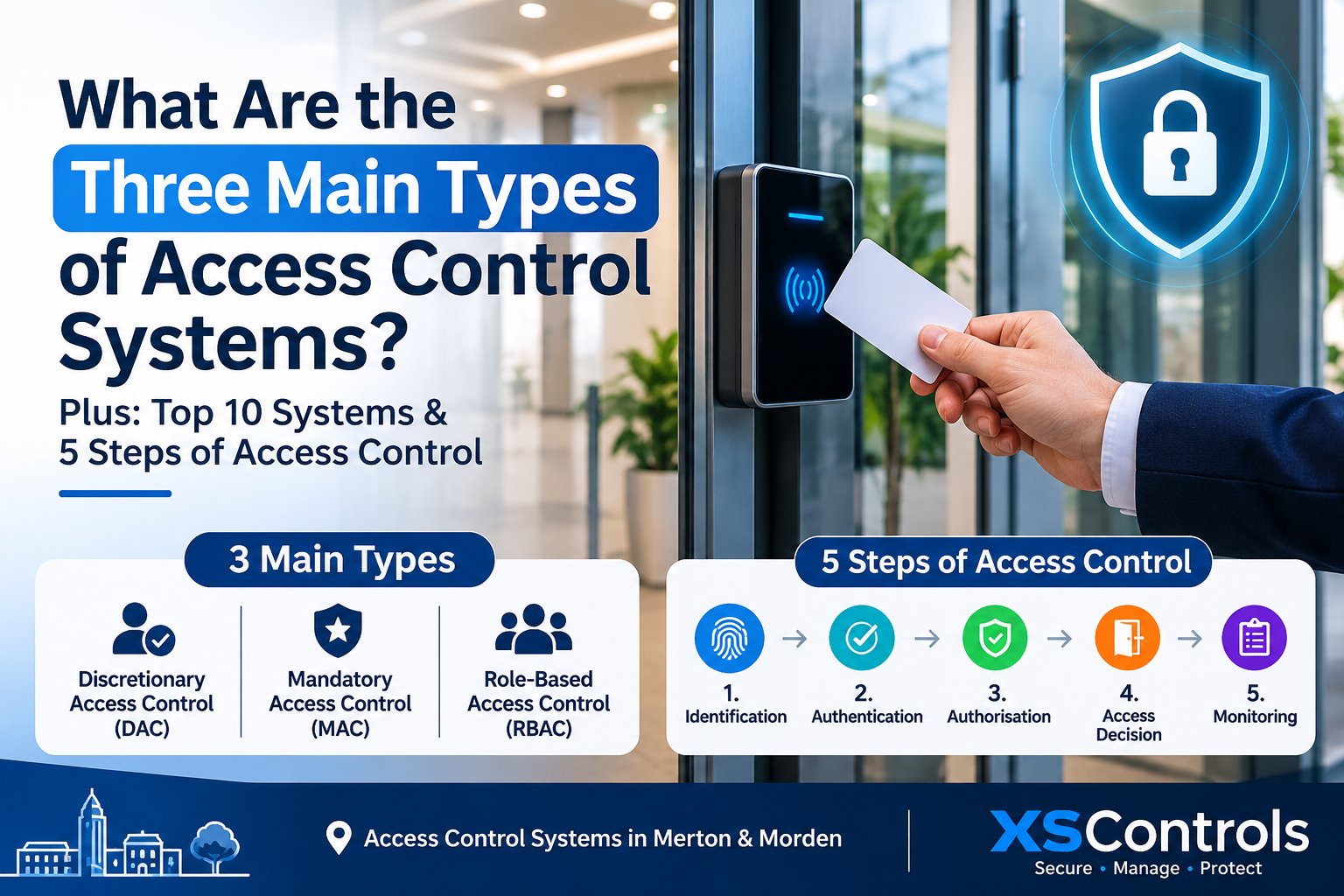
The three main types of access control systems are Discretionary Access Control (DAC), Mandatory Access Control (MAC) and Role-Based Access Control (RBAC). In physical security, businesses also commonly use key-based, card-based and biometric access control systems to manage entry through doors and restricted areas.
This guide explains how these systems work, explores the top 10 access control systems and outlines the five steps of access control to help you make an informed decision.
What Are the Three Main Types of Access Control Systems?
The three main types of access control systems are based on how permissions are assigned and managed. Understanding their differences can help you choose a suitable security arrangement for your premises.
1. Discretionary Access Control (DAC)
Discretionary Access Control allows the owner of a resource to decide who can access it. The owner can grant or revoke permissions according to their requirements.
For example, a business owner may allow selected employees to enter a storage room or access particular digital files. DAC offers flexibility and is relatively straightforward to manage. However, it relies heavily on the decisions of individual users, which may make it less suitable for highly sensitive environments.
2. Mandatory Access Control (MAC)
Mandatory Access Control uses centrally defined security policies to determine who can access specific resources. Permissions are generally assigned according to security classifications and user clearance levels. Individual users cannot freely change these permissions.
This approach is commonly associated with highly secure environments, such as government facilities and organisations handling sensitive information.
3. Role-Based Access Control (RBAC)
Role-Based Access Control assigns permissions according to a person’s job role or responsibilities. For example, an office receptionist may have access to the reception area, while a facilities manager may also be permitted to enter plant rooms and maintenance areas.
RBAC makes it easier to manage access across larger organisations because permissions can be updated when employees change roles. For many commercial premises, role-based permissions provide a practical way to manage access without issuing unnecessary privileges.
What Are the Different Types of Physical Access Control Systems?
Although DAC, MAC and RBAC describe access control models, physical access control systems use different technologies to verify a person’s identity before allowing entry.
The most common options include:
- Key-based access: Traditional locks and keys provide a simple way to control entry, although lost keys may require locks to be replaced.
- Card and fob access: Employees use an access card or fob to unlock a door. Lost credentials can usually be deactivated without changing the lock.
- PIN-based access: Users enter a personal identification number to gain entry. Shared PINs should be avoided where individual accountability is important.
- Biometric access: Fingerprint or facial recognition technology verifies a person’s identity using biometric characteristics.
- Mobile access: Smartphones act as digital credentials, allowing authorised users to unlock compatible doors.
The most suitable option depends on the building, number of users, security requirements and available budget.
What Are the Top 10 Access Control Systems?
There is no single ranking of the best access control systems for every property. The right choice depends on the level of security, number of access points and how the system will be managed.
Here are ten common access control solutions worth considering:
- Card and fob access control: Suitable for offices, schools and commercial buildings with regular staff access.
- PIN-based door access: A practical option for smaller premises and controlled entry points.
- Biometric access control: Useful where stronger identity verification is required.
- Mobile access control: Allows users to unlock compatible doors using smartphones.
- Video intercom access control: Enables occupants to see and communicate with visitors before granting entry.
- Standalone access control: A simple solution for individual doors that do not require central management.
- Networked access control: Allows multiple doors and users to be managed from a central system.
- Cloud-based access control: Enables authorised administrators to manage access through an online platform.
- Wireless access control: Reduces the need for extensive cabling, making it useful for certain existing buildings.
- Integrated access control: Connects access management with other security technologies, such as CCTV and intruder alarms.
For businesses in Merton and Morden, the best solution may combine several of these technologies. A card-based system with video intercom access, for example, could provide convenient staff entry while allowing reception teams to manage visitors.
What Are the 5 Steps of Access Control?
A well-designed access control process follows five key steps to ensure that only authorised people can enter restricted areas.
1. Identification
The system identifies the person requesting access. This may involve presenting an access card, entering a PIN or using a mobile credential.
2. Authentication
The system verifies that the presented credential belongs to the person requesting access.Depending on the technology, authentication may involve a password, PIN, card, biometric characteristic or combination of methods.
3. Authorisation
The system checks whether the person has permission to enter the requested area.
For example, an employee may be authorised to enter the main office but restricted from accessing a server room.
4. Access decision
The system either grants or denies entry based on the person’s permissions. If access is approved, the door or barrier unlocks. If access is denied, the system keeps the entry point secured.
5. Auditing and monitoring
Access events can be recorded to help administrators review activity, investigate incidents and identify unusual access attempts. Regularly reviewing permissions also helps ensure that former employees and visitors no longer have access when they should not.
Choosing Access Control Systems in UK
Businesses looking for access control systems in Merton and Morden should consider more than the initial installation cost. The right system should suit the building’s layout, the number of users and the level of security required.
Before choosing a solution, consider:
- How many doors or entry points need protection?
- Will employees, visitors and contractors require different permissions?
- Is remote access management important?
- Does the building already have compatible locks, doors or security equipment?
- Will the system need to integrate with CCTV or video intercoms?
- How will access be managed when staff leave or change roles?
A professional access control provider can assess the premises, identify suitable equipment and help ensure the system is installed and configured correctly.
For properties in Merton, Morden and surrounding areas, professional advice can help businesses avoid unsuitable equipment and unnecessary installation costs.
Why Choose Professional Access Control Installation?
Installing an access control system involves more than fitting a card reader or keypad. The equipment must be compatible with the door hardware, power supply and security requirements. Permissions must also be configured correctly so that authorised users can enter without compromising restricted areas.
Professional installation can help with:
- Selecting suitable access control equipment.
- Integrating door readers, locks and intercoms.
- Configuring user permissions and access schedules.
- Testing the system before it is put into operation.
- Providing guidance on managing credentials and maintaining security.
At XSControls, businesses can explore access control and security solutions designed to help manage entry and protect their premises.
Whether you are securing a small office in Morden or a larger commercial property in Merton, choosing the right access control system is an important step towards improving building security.
Frequently Asked Questions
What is the most common type of access control system?
Card and fob-based access control is a common choice for commercial buildings because it offers convenient entry management and allows lost credentials to be deactivated.
Which access control system is best for a small business?
A PIN-based or card-based system may suit a small business with a limited number of entry points. Businesses requiring more detailed access permissions may benefit from a networked or cloud-based solution.
Is biometric access control more secure than card access?
Biometric access control can provide stronger identity verification because it uses a person’s physical characteristics. However, security also depends on the quality of the equipment, system configuration and how credentials are managed.
Can access control systems work with CCTV?
Yes. Compatible access control systems can integrate with CCTV to help security teams review entry events alongside video footage.
Do access control systems require regular maintenance?
Yes. Regular checks help ensure that readers, locks, credentials and software continue to work correctly. Maintenance requirements depend on the equipment and the building’s security needs.
Secure Your Premises with the Right Access Control System
Choosing an access control system is an important investment in the security and management of your property.
Understanding the three main access control models, the available technologies and the five steps of access control can help you make a more informed decision.
For businesses across the UK, XS Controls can help you explore suitable access control solutions for your premises.
Contact XS Controls today to discuss your access control requirements and find a suitable security solution for your building.
