 Skip to content
The Ultimate Infrastructure Debate: Cloud Based Access Control vs Traditional Access Control
When architecting a modern facility’s perimeter defense, security directors are no longer just choosing physical barriers, perimeter gates, or specialized vehicle inspection tools. They are deciding how the entire entry ecosystem communicates. For years, localized, server-bound infrastructure was the gold standard. However, the rise of smart automation has sparked a critical debate among facility managers and security heads: cloud based access control vs traditional access control.
At XS Controls, as a premier reseller of high-grade commercial security systems and specialized checkpoint solutions, we understand that upgrading your infrastructure is a significant capital investment. Security personnel need to know whether to stick with a familiar legacy setup or migrate to a modern, internet-connected framework. In this comprehensive guide, we will break down the structural differences between cloud based access control vs traditional access control, helping you determine which model offers the highest security ROI for your organization.
What is Traditional Access Control?
To understand the core differences in the cloud based access control vs traditional access control matchup, we must first look at how legacy systems operate. On-premise, or traditional, systems rely on a physical server located directly inside your building.
This server acts as the central brain, hosting the security software database, managing user profiles, and processing credentials for every door, gate, or turnstile.
- Hardware Dependability: All data travels via local network cabling directly to physical control panels mounted in your IT closets.
- Localized Management: If a building manager needs to update system permissions, add a new employee badge, or pull an entry log report, they must typically do so from a dedicated workstation physically connected to that local network.
While this standalone architecture has proven reliable for decades, it introduces physical vulnerabilities and operational bottlenecks that modern enterprises struggle to justify.
What is Cloud Based Access Control?
In contrast, the newer contender in the cloud based access control vs traditional access control comparison moves the heavy lifting off-site. Instead of purchasing and maintaining an expensive local server, the system’s “brain” is hosted in a secure, remote data center managed by a specialized cloud provider.
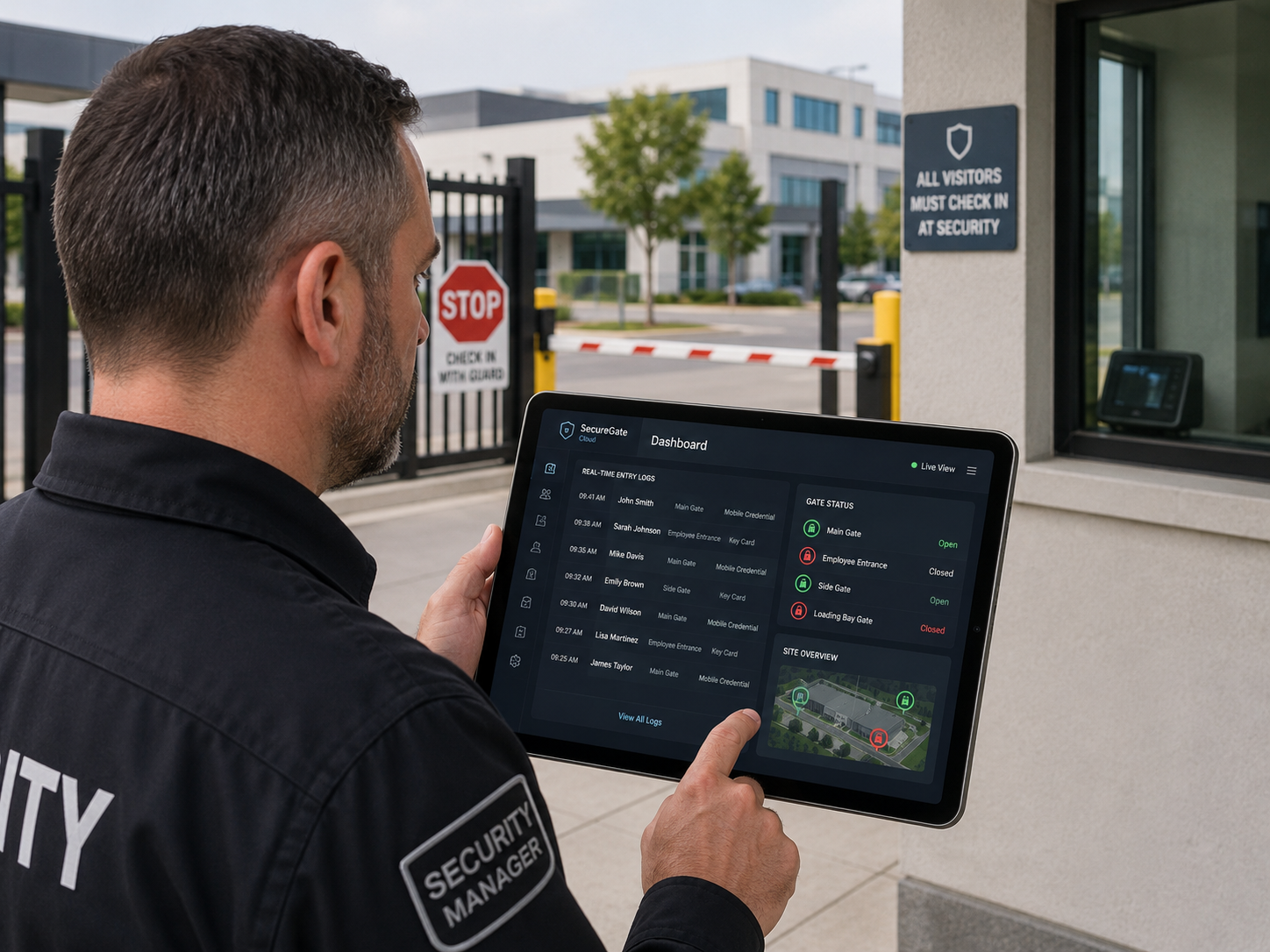
Physical doors and perimeter checkpoints still use local edge controllers and credential readers, but these devices communicate directly with the cloud via a secure internet connection. In a cloud based access control vs traditional access control evaluation, the cloud model introduces unparalleled flexibility: administrators can securely manage the entire system, revoke credentials, adjust scheduling, and monitor live entry events from any web browser or smartphone app, anywhere in the world.
Direct Comparison: Cloud Based Access Control vs Traditional Access Control
+--------------------------+-----------------------------------+-----------------------------------+
| Feature                  | Cloud Based Access Control        | Traditional Access Control        |
+--------------------------+-----------------------------------+-----------------------------------+
| Server Hardware          | None required on-site             | Physical on-site server required  |
| Remote Administration    | Native via web/mobile apps        | Highly restricted or complex VPN  |
| Software Updates         | Automatic, pushed from the cloud  | Manual patches required by IT     |
| Scalability              | Instant; add doors or sites easily| Limited by local server capacity  |
| Initial Cost (CapEx)     | Low upfront hardware expense      | High upfront server/software cost |
+--------------------------+-----------------------------------+-----------------------------------+
Key Operational Differences to Consider
Choosing between cloud based access control vs traditional access control requires analyzing how each system impacts your daily operations, your IT team, and your long-term security posture.
1. Scalability and Multi-Site Management
For organizations managing multiple locations, logistics hubs, or widespread corporate campuses, comparing cloud based access control vs traditional access control quickly reveals a clear winner.
With an on-premise system, expanding your security footprint means deploying a separate server or configuring complex, expensive virtual private networks (VPNs) to link remote properties back to headquarters. Conversely, a cloud-managed system allows you to bring a new branch office, warehouse, or vehicle checkpoint online instantly. You simply install the web-connected edge controllers, link them to your main cloud account, and manage your entire national or global footprint from a single pane of glass.
2. Maintenance and Total Cost of Ownership (TCO)
When analyzing the financial impact of cloud based access control vs traditional access control, you must look beyond the initial invoice. Traditional systems demand significant capital expenditure (CapEx) for server hardware, software licenses, and specialized IT setup. Over time, they incur hidden maintenance costs, including server electricity, cooling, hardware replacements, and manual software patching.
A cloud-based model shifts security budgets to an operational expenditure (OpEx) framework. Upfront hardware costs are drastically reduced because there is no local server to buy. Software updates, cybersecurity patches, and database backups happen automatically in the background without drawing on your internal IT resources, keeping your total cost of ownership highly predictable.
3. Cybersecurity and System Resilience
A major point of discussion in the cloud based access control vs traditional access control debate centers on network security. Proponents of legacy setups often argue that keeping data entirely localized is safer because it isn’t exposed to the open internet. However, an on-premise server is only as secure as the local firewall protecting it. If your IT department falls behind on server patches, that hardware becomes highly vulnerable to network breaches.
Enterprise cloud platforms utilize dedicated teams of cybersecurity experts, end-to-end data encryption, and redundant backup power grids. If a physical disaster—such as a fire, flood, or prolonged power outage—strikes your local facility, a traditional server could be destroyed, wiping out your logs and system control. A cloud network ensures your database remains safe and accessible, allowing security teams to retain remote visibility over the property.
Why the Modern Perimeter Demands a Cloud-First Approach
At XS Controls, we specialize in hardening entry points, securing vehicle access lanes, and optimizing checkpoint workflows. When evaluating cloud based access control vs traditional access control for large-scale security operations, integration capacity becomes a critical factor.
Modern security teams no longer operate tools in isolation. They need credential platforms that talk directly to video surveillance tools, visitor management software, and automated scanning hardware. Cloud-based networks are built with open Application Programming Interfaces (APIs), making it simple to link your entry points with real-time analytics.
When a vehicle passes an inspection point, a cloud network can seamlessly tie the vehicle’s scan data, the driver’s identity, and the physical gate status into a centralized security feed. This level of automated cross-communication is difficult and costly to achieve when dealing with the rigid architecture of legacy configurations.
Conclusion: Future-Proofing Your Security Infrastructure
The transition from localized hardware to web-connected systems is redefining how commercial facilities operate. While on-premise networks may still have a place in highly isolated environments with restricted external internet access, the overwhelming majority of modern businesses benefit from migrating to a web-based ecosystem.
When weighing cloud based access control vs traditional access control, the cloud model delivers superior marks across scalability, cybersecurity, remote accessibility, and long-term cost reduction. It eliminates the administrative burden of physical tokens, automates system health checks, and allows facility directors to focus on real security rather than server maintenance.
Don’t let legacy infrastructure become the weak link in your security chain. Contact XS Controls today for an enterprise consultation. Our technical team is ready to analyze your existing checkpoint topology, explain the transition process, and design a modern, scalable solution that keeps your facility safe, compliant, and highly efficient.
